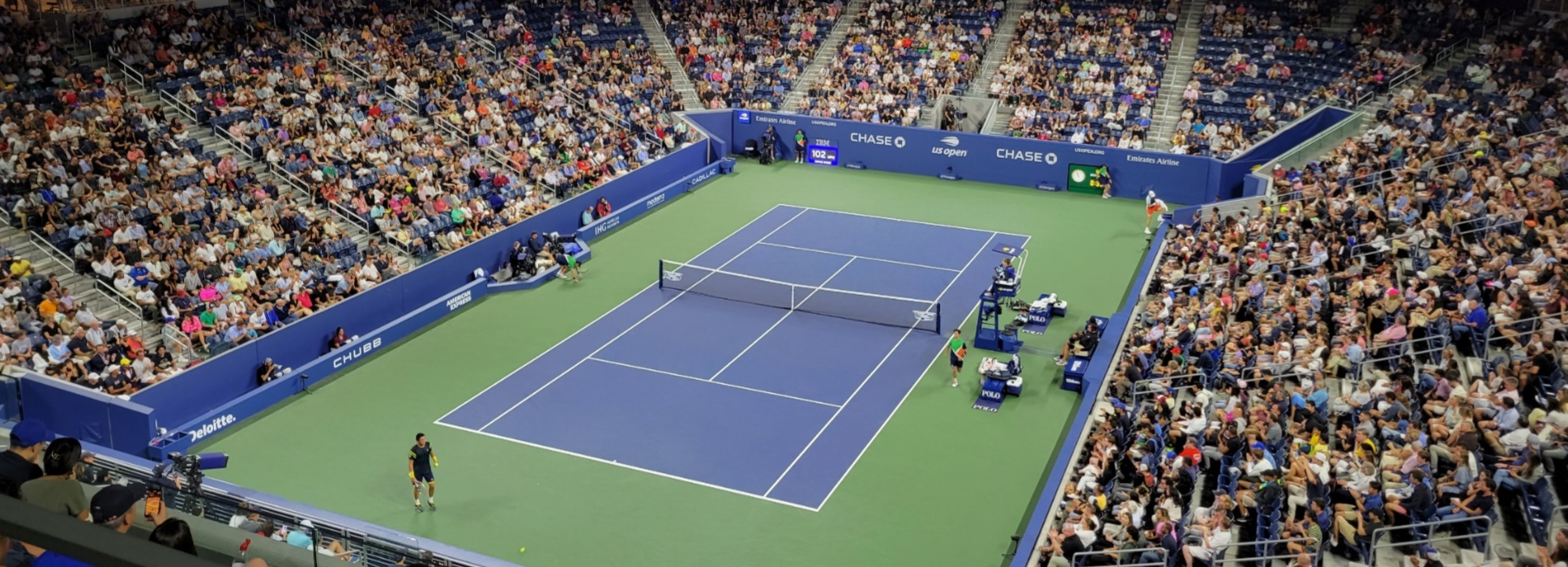
Iva Jovic vs. Coco Gauff: What Happens When the Ball Comes Back?
Iva Jovic walked onto Arthur Ashe Stadium facing a fascinating problem.
At 18, she already owns the kind of aggressive baseline game that overwhelms a lot of opponents. Against Coco Gauff, the ball kept coming back.
That’s an entirely different problem.
Let’s talk tennis.

_01.jpg)
Jovic actually started beautifully, breaking Gauff immediately and showing no signs that the stage or opponent intimidated her.
Then Gauff settled in.
By the middle of the first set, you could see the equation changing. Jovic attacked. Gauff defended. Jovic attacked again. Gauff defended again.
Shots that normally produce weak replies or end points weren’t accomplishing either.
So Jovic did what aggressive young players often do.
She pushed harder.
The margins became smaller, the errors increased and Gauff ran away with the first set 6-1.
Here’s where the match became much more interesting to me.
Jovic didn’t simply keep banging her head against the wall.
She adjusted.
Sometimes Losing Shows You Exactly What You Need
Jovic became more selective in the second set. Instead of always trying to hit through Gauff from the baseline, she began following strong shots forward and looking to finish at the net.
The errors came down. The points became more competitive. Suddenly we had a match again.
Gauff still won the second set 6-4, but Jovic had already shown us something important.
She can learn during a match.
That’s one of the characteristics I look for in young players. Weapons are wonderful. Athletic ability helps. But professional tennis eventually asks everyone the same question: What do you do when your favorite solution doesn’t work?
Against Gauff, Jovic received a terrific education.
Coco’s movement and defense force aggressive players to reconsider what constitutes a good attacking ball. Against many opponents, Jovic may hit a strong forehand and reasonably expect the point to be nearly finished.
Against Gauff, that might merely be the beginning.
You can’t become frustrated by that.
This is where rally tolerance becomes more than the ability to hit another ball. It’s the emotional willingness to hit another ball without feeling that something has gone wrong.
Attack. Recover. Attack again.
Wait.
The opportunity may come three shots later than you’re accustomed to seeing it.
Jovic also learned something encouraging. When she changed the way she constructed points, she became more competitive. She didn’t suddenly need a new forehand or serve. She needed better solutions for this particular opponent.
That’s tremendous information for an 18-year-old.
Gauff is a major champion. Her ability to absorb pressure, stay composed and make opponents play another ball is precisely why she’s so difficult to beat.
Jovic now knows exactly how that level feels.
The next time they play, she won’t be discovering it.
She’ll be preparing for it.

.jpg)
First Ball Forehand Match Point
Sometimes a loss doesn’t expose what’s wrong with your game. It shows you what your game needs next.
Jovic didn’t leave New York with the win. She left with something she can use to get one next time.
Source: Publicly available ATP/WTA reporting and season coverage.